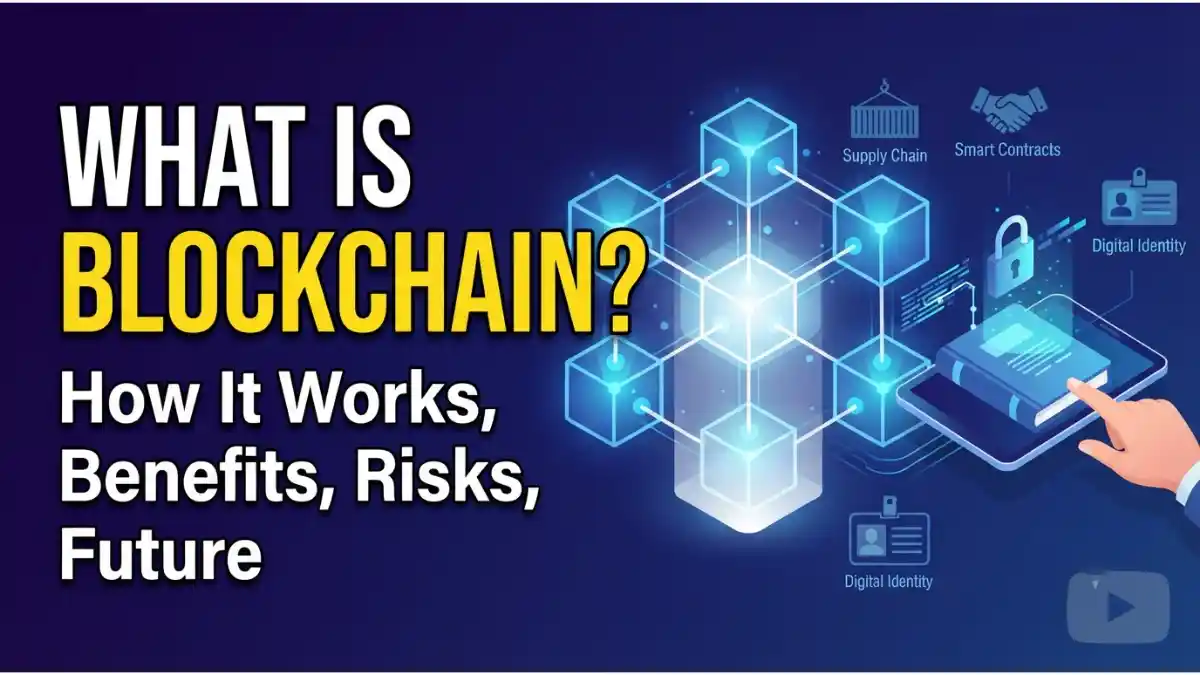
What Is Blockchain? The Ultimate Guide
Blockchain technology has moved far beyond its origins as the foundational architecture for Bitcoin. Today, it stands as a revolutionary method for securing, tracking, and sharing data across decentralized networks, transforming industries from finance and supply chain to healthcare and real estate.
1. What Is Blockchain?
At its core, a blockchain is a decentralized, distributed ledger that securely records transactions across a peer-to-peer network of computers.
Unlike traditional databases—which are usually managed by a single central authority or administrator—a blockchain is shared across all participants in the network. Once a block of data is recorded onto the blockchain, it becomes extremely difficult to alter or tamper with, because doing so requires altering every subsequent block and gaining consensus from the majority of the network.
2. How Blockchain Works
The blockchain mechanism relies on cryptography, consensus algorithms, and distributed networks to ensure data integrity. The process flows through several distinct steps:
- Transaction Initiation: A user requests a transaction (e.g., sending digital currency or transferring data).
- Block Creation: That requested transaction is combined with other transactions to create a new “block” of data.
- Network Broadcasting: The block is sent out to every node (computer) participating in the network.
- Validation & Consensus: Network nodes validate the transaction using established protocols (such as Proof of Work or Proof of Stake).
- Chain Integration: Once verified, the new block is permanently and cryptographically chained to the existing ledger, completing the transaction loop.
3. Key Characteristics of Blockchain
Blockchain technology derives its unique power from a specific combination of properties:
- Decentralization: No single entity or central authority controls the network, removing single points of failure.
- Immutability: Once written, data cannot be modified or deleted without network consensus, ensuring permanent audit trails.
- Transparency: All network participants share the same documentation, allowing for real-time tracking and public verification of transactions.
- Enhanced Security: Cryptographic hashing safeguards data integrity, making unauthorized hacking or data tampering virtually impossible.
4. Major Benefits of Blockchain Technology
Organizations across the globe adopt blockchain infrastructure to solve longstanding operational inefficiencies:
- Unmatched Trust: Cryptographic verification ensures parties who do not know each other can transact securely without relying on a middleman.
- Greater Efficiency: Removing intermediaries and manual reconciliation speeds up transaction processing times drastically.
- Traceability: In supply chains, blockchain allows companies to trace an item’s exact journey from its origin to the end consumer.
- Reduced Costs: By automating processes and eliminating third-party fees, operational overhead drops significantly.
5. Real-World Applications and Use Cases
Blockchain goes well beyond cryptocurrencies. Current enterprise and consumer applications include:
- Supply Chain Management: Companies like Walmart use blockchain to track food items from farm to store shelves, reducing food safety incidents and tracing contamination sources in seconds.
- Smart Contracts: Self-executing digital contracts coded directly onto a blockchain that automatically trigger actions (like payment release) when predetermined conditions are met.
- Digital Identity Management: Providing individuals with secure, sovereign control over their personal identity data, reducing identity theft.
- Cross-Border Payments: Settling international financial transactions in seconds rather than days, with a fraction of traditional banking fees.
6. Risks and Challenges of Blockchain
Despite its massive potential, blockchain technology faces several hurdles before achieving universal mainstream adoption:
- Scalability Issues: Public blockchains process transactions slower than centralized legacy databases because every node must verify every transaction.
- High Energy Consumption: Networks relying on traditional Proof of Work consensus mechanisms demand enormous amounts of computational power and electricity.
- Regulatory Uncertainty: Governments worldwide are still defining legal frameworks for cryptocurrencies and blockchain deployments, creating compliance risks.
- Irreversibility: If a user makes a mistake or falls victim to fraud, transactions cannot be reversed or refunded by a central customer service team.
7. The Future of Blockchain
The future of blockchain points toward enterprise integration, interoperability, and scalability. Solutions like Layer 2 scaling networks, zero-knowledge proofs (ZK-proofs) for privacy, and central bank digital currencies (CBDCs) are paving the way for mainstream adoption. As infrastructure matures, blockchain will increasingly operate quietly behind the scenes of everyday digital systems.
Conclusion
Blockchain technology represents a fundamental shift in how we manage digital trust and transfer value. Whether you are building decentralized applications, streamlining business operations, or exploring financial markets, understanding how blockchain works is essential for navigating the future of the digital economy.